Opinion · Street
Jordan and Ewing retros should make history wearable
October 18, 2026 · Basketball history and sneaker culture
Patrick Ewing's black, orange and blue FOCUS has a stronger story than most release-day slogans. Ewing Athletics identifies the retro as the colorway he wore in the 1993 playoffs. Its claim on a fan's attention begins with basketball, long before the checkout button.
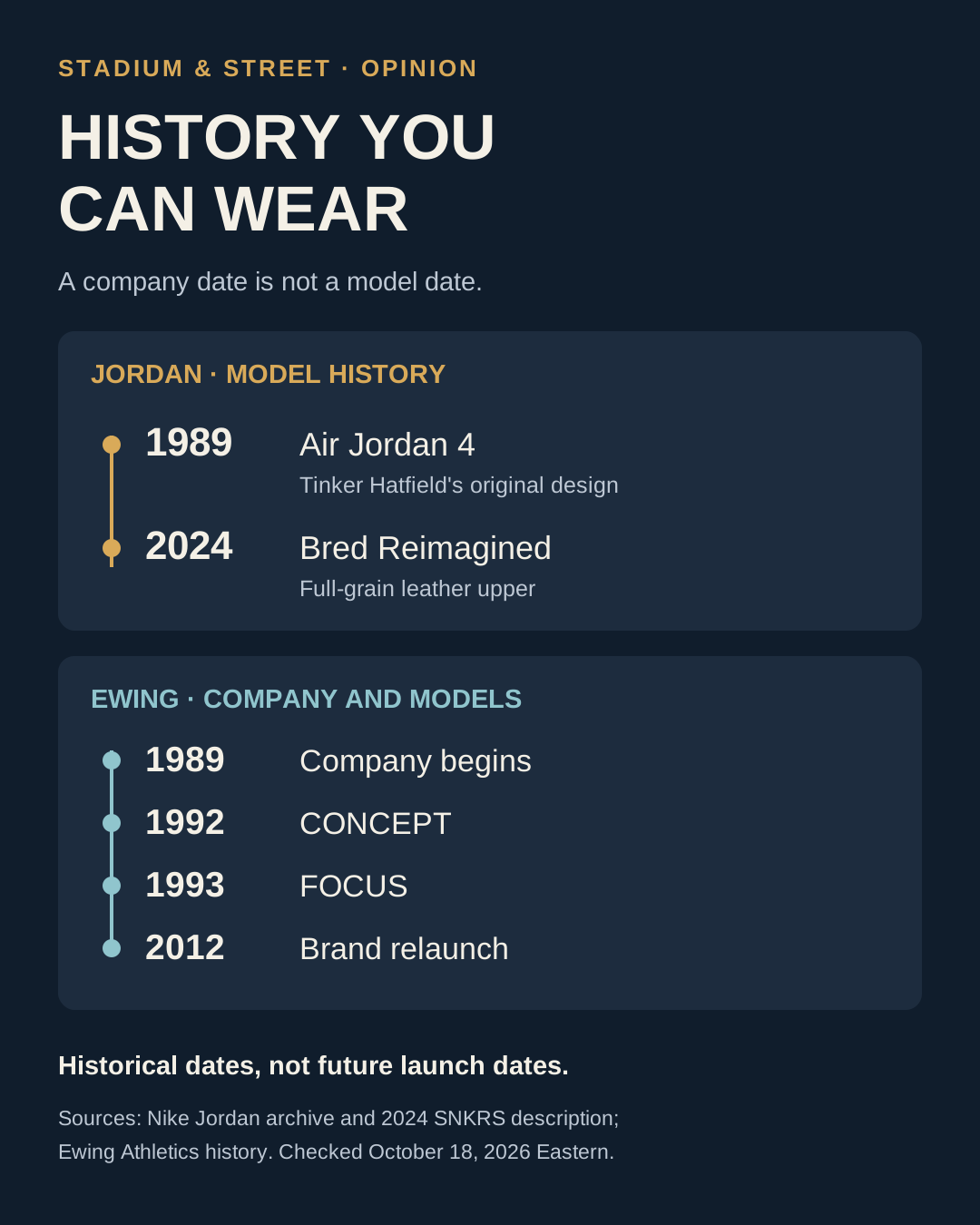
The Air Jordan 4 carries its own history. Nike's archive dates Tinker Hatfield's design to 1989 and places it beside Jordan's series-ending shot against Cleveland. The same archive notes the shoe's appearance in Spike Lee's Do the Right Thing. Here was a basketball object becoming part of a wider cultural conversation.
That is a good reason to bring these shoes back. It is also a reason to expect something better than another opportunity to spend money.
A worthwhile retro should make a meaningful design available to people who want to wear it. It should explain what has been preserved and what has changed. And it should leave a fan free to say that the pair already in the closet is enough.
Two basketball histories worth keeping
Ewing Athletics' October 12 NY Forever announcement looks backward quite deliberately. The brand lists a white 1992 CONCEPT for November 13, a white FOCUS prototype edition for late October and a white 33 HI for December. Those last two are release windows, not exact dates. The black FOCUS was described as already released.
The sequence gives the collection some substance. In the company's own history, Ewing introduced the CONCEPT for the 1992 season and wore the FOCUS in 1993. The brand dates its beginnings to 1989 and its relaunch to 2012. These are models attached to an athlete's working career, rather than a name placed on an unrelated shoe years later.
For a Knicks fan, those orange and blue accents can carry a particular meaning. They can evoke a team and an era without requiring a claim that everyone experienced either the same way. Someone too young to have watched Ewing can like the design without borrowing an older fan's memories.
Jordan's story reaches a different audience, and sometimes the same one. The appeal of the black and red 4 need not depend on having watched the Cleveland shot live. A younger wearer can discover the basketball after discovering the shoe. That is one of the useful things a retro can do: give history a way into the present that does not feel like homework.
The return now being reported for the Jordan 4 OG Bred belongs in that conversation. Sneaker News' latest listing gives November 27 and a $230 adult price, although older text on the same page retains November 28. Those remain reported details here, rather than a verified Nike launch notice. The argument for the shoe should survive a change in its release date.
A new generation deserves a first pair
The best objection to complaining about repeated releases is also the fairest. The customer is not always the same person.
Someone who missed an earlier version may finally have the money. A younger fan may be buying a first pair. An owner may simply have worn an old pair out. None of those people should have to defend the purchase to someone who got there first.
Being early is not a greater form of fandom. Remembering the original is a pleasure, not a credential that gives one generation authority over the next.
There is room for a changed version, too. Nike's Spring 2024 collection included the Bred Reimagined, and its SNKRS description identifies a full-grain leather upper. That is a material choice a buyer can assess. Preferring it does not make someone less serious than a collector who wants the older look. Nor does the brand's description establish how either version will feel on a particular person's foot.
A retro should be able to serve both instincts: the wish to preserve a design and the wish to make it useful now. The honest question is what changed and whether the buyer wants that change.
Loyalty should not require another purchase
The trouble begins when affection for a player or a city becomes a reason to stop judging the product.
The name on the box cannot answer questions about construction. A familiar colorway cannot establish comfort. A reference to an old playoff run cannot tell a customer how much use a new pair will provide. Those judgments belong to the actual shoe and the person wearing it.
Brands trading on history should make those distinctions easy. Show the differences between editions. Describe materials plainly. Give a release date its proper region and time. Let buyers understand what their money gets them without having to reconstruct the answer from competing posts.
There is nothing embarrassing about liking an old design enough to buy it again. There is equally little virtue in purchasing every version. A fan who keeps wearing a previous pair has not fallen behind basketball history.
Scarcity should not become the measure of whether the release mattered, either. If a retro reaches people who genuinely wanted it, availability can be part of its success. Selling through immediately is not the only outcome worth celebrating. That is a standard fans can choose, whatever a brand or a resale market happens to reward.
The more generous understanding of sneaker culture leaves room for the collector, the everyday wearer and the person who enjoys looking without buying. None owes the others a receipt.
Let the shoes have another life
Jordan and Ewing deserve a place in this discussion because the basketball is still worth remembering. Their shoes offer different ways to carry it forward. That connection can be sincere even when the product is being sold for profit.
But memory should sharpen a fan's judgment. It should not excuse every price, every alteration or every new sales pitch attached to an old name.
Bring the classics back. Give a younger fan a first pair and an older fan a replacement. Make the design well enough that it earns a place in someone's daily life.
The original moment cannot be reissued. The shoe can. The responsibility is to make this pair worth wearing.
Go to the sources
See something that needs attention? Read our corrections process.