Opinion · Baseball
What baseball owners owe the fans
October 17, 2026 · MLB labor debate
Milwaukee is going to the World Series. The people who built that club deserve credit. So do the players who turned it into a pennant winner.
But a pennant should not become an argument that smaller-market fans ought to be grateful for whatever their owners choose to spend.
Cleveland and Tampa Bay also reached the League Championship Series. Those three clubs have given baseball's salary-cap debate an inconvenient set of facts. Money plainly matters. So does the judgment of the people spending it. This October cannot tell us what a different economic system would have produced.
Before fans are asked to endorse a ceiling on payroll, they deserve to know what owners would be bound to do in return. A meaningful spending floor and a workable revenue-sharing agreement belong at the center of that discussion. So does the question that gets lost when the argument becomes a referendum on the Dodgers: will this make more clubs serious about competing?
Give the baseball people their due
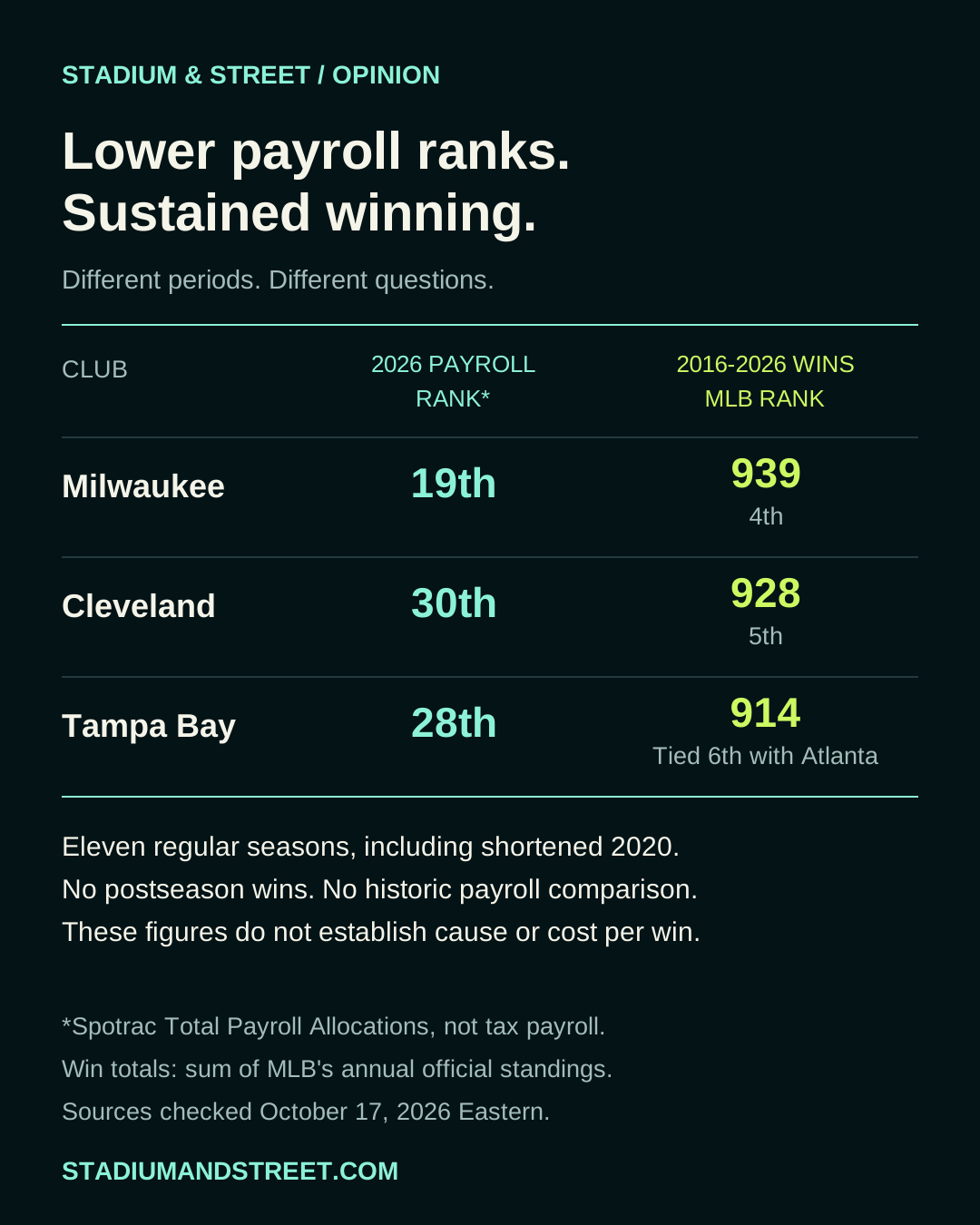
Spotrac's 2026 Total Payroll Allocations table places Milwaukee 19th, Tampa Bay 28th and Cleveland 30th. That is one dated measure of payroll, distinct from active-roster salaries, cash spending or the payroll used for tax purposes.
Their records are more than an October curiosity. Adding MLB's official regular-season standings from 2016 through 2026 gives Milwaukee 939 wins, fourth in baseball; Cleveland 928, fifth; and Tampa Bay 914, tied for sixth with Atlanta. That is eleven seasons, including the shortened 2020 season, with no postseason wins included. These totals do not establish how much the clubs spent throughout that period.
That much sustained winning deserves respect. It reflects the work of scouts, coaches, players and front offices whose decisions cannot be reduced to a payroll ranking.
Yet their skill does not tell us whether more investment could have made those clubs better, or allowed them to keep more of the players they developed. Winning within a limited budget is an achievement. It need not become a permanent limit on what fans are allowed to expect.
Why the cap appeals
The strongest argument for a cap starts with an entirely reasonable frustration. A fan should not need everything to go right to compete with a club that can afford an expensive mistake. Financial room can buy depth. It can buy another attempt when the first plan fails.
There is something else worth protecting: the chance to watch a good team grow together. Fans get to know a lineup over summers, not spreadsheets. Wanting a better chance to keep those players is a legitimate concern, not evidence that somebody has been fooled by an owner's talking points.
Milwaukee's pennant does not answer that concern. Neither does the elimination of an expensive opponent erase the advantages that money can provide over time.
MLB supports a cap and floor. The union opposes a cap and cites lower-payroll contenders.
There is no need to accept either side's entire argument to recognize that baseball has a real question to resolve.
What would owners promise in return?
The owners' proposal includes a floor. It should be judged on its terms, not dismissed as though that part of the offer did not exist.
But the word alone is not enough. Fans should be able to understand what spending counts toward the requirement, when a club must meet it and what happens if it does not. The agreement also has to address how clubs with different revenue bases would fund the obligation. Those are tests for any final bargain, not claims that the parties have already settled its terms.
A floor cannot make an owner choose the right players. It can, if properly designed and enforced, require a financial commitment. A ceiling can narrow a spending gap without making every baseball operation equally capable. Neither deserves to be sold as a cure for losing.
MLB already taxes payrolls above a threshold; that is not a hard spending ceiling. The choice is not simply a cap or an agreement frozen in place. Changes to revenue sharing and incentives also deserve examination.
And the players belong in this accounting. More spending at the bottom would not, by itself, establish that restrictions at the top produce a fair deal. How the money is distributed matters to the people playing the games as well as the people watching them.
The fans have a stake, not a blank check
Sports Business Journal's March 5 summary of an Athletic survey reported that 68% of 14,154 respondents supported a cap-and-floor system. It was a non-scientific reader poll conducted February 10-23, not a representative vote of every baseball fan. Nor was it an endorsement of every term owners might propose.
That result is worth taking seriously. So is the distinction between liking an idea and accepting a contract. The floor, ceiling and enforcement rules are the bargain itself.
Under Article XXVI, the current agreement ends at 11:59 p.m. Eastern on December 1, 2026. December 2 is the first day after that deadline. Expiration does not, by itself, announce a work stoppage.
The risk deserves sober attention. A lost season should not be treated as a foregone conclusion.
The Brewers, Guardians and Rays have given their fans good baseball. That is the point of the enterprise. Before baseball places a new limit on what a club may spend, its owners should explain what every club will owe the people who keep coming back. A payroll rule earns its value in the team on the field and in the hope a fan can reasonably carry into the next summer.
Go to the sources
See something that needs attention? Read our corrections process.