The Street · Friday edition
The Street: a signature shoe needs more than another color
October 23, 2026 · Sneakers, design and collecting
A red shoe can change the look of a basketball court. It cannot, by color alone, change the way a shoe plays. That is the useful distinction behind Friday's Anthony Edwards 3 release: a fresh version of an existing signature model, with a familiar question about how much of the player an object can carry.
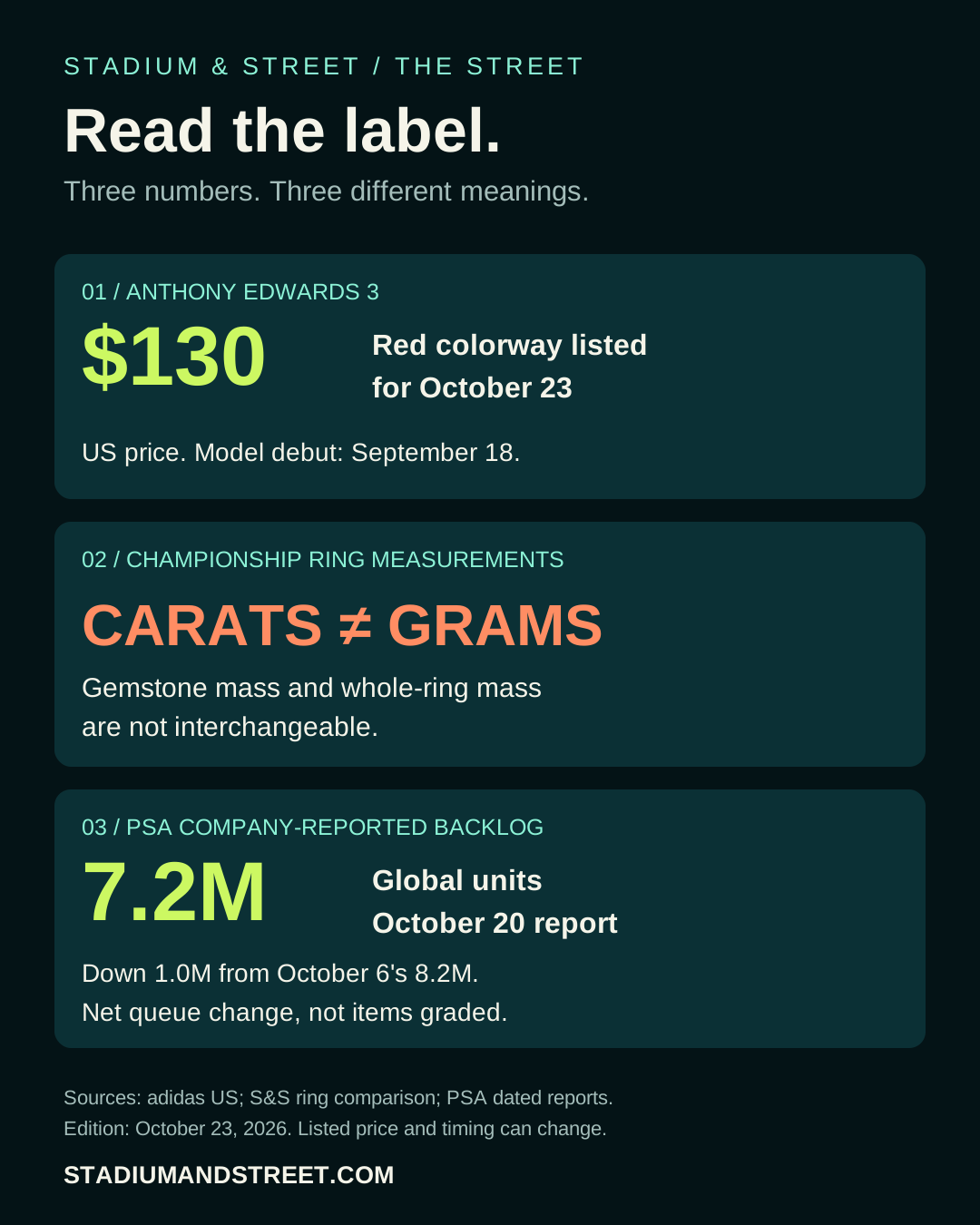
Adidas' U.S. listing puts the Lucid Red / Silver Metallic / Core Black version, product KJ3021, on the calendar for October 23 at $130. It still said Coming Soon during our Friday morning check. The model itself made its debut in the Cold Blooded colorway on September 18, according to adidas' launch announcement.
The company describes a foam midsole, supporting cage and reinforced toe. Those are design features to consider, not a substitute for trying the shoe. We have not wear-tested it. A different color can give the shape a different personality without establishing a different playing experience.
The original launch also introduced MINNATLANTASOTA, a sketch series built around Edwards and other adidas athletes. That is a more interesting attempt to make a signature line recognizable than simply issuing another color. It gives the player a role in the story beyond the name on the box.
Personality matters. A signature shoe is meant to suggest something about its athlete even when he is nowhere near the person wearing it. But the basketball player buying a pair still has a practical decision to make: fit, comfort and whether it suits the way that person moves. An entertaining campaign cannot answer those questions.
The red version may be precisely the look someone wants. That preference is enough. It does not need an invented scarcity claim or a promise that the shoes will become valuable. The best signature lines leave room for both the player's character and the buyer's own taste.
The Garden was the ring's best detail
Our October 20 Knicks ring critique found the most persuasive design idea inside the object: a miniature Madison Square Garden. The building gives the keepsake a place, not merely another large number in a jewelry announcement.
A championship belongs to a team, but its memories also belong to the room where people gathered to watch it. The Garden detail makes that connection tangible. It is a stronger idea than asking the ring to win a contest over weight or sparkle.
The figures still deserve clear labels. Stone count, gemstone carats, metal purity and whole-ring grams are different measurements. The designer interviews used different scopes for the reported gem weight. Our original comparison preserves that distinction rather than manufacturing a record from numbers that do not match.
A smaller backlog is not a personal delivery date
PSA's October 20 report put its global backlog at 7.2 million units, compared with 8.2 million on October 6. The source-linked history on our PSA board now contains nine dated observations, including the earlier rise and subsequent declines.
The latest interval shows a net reduction of one million units. It does not show how many items were graded: new submissions and other changes can affect the queue. Nor does a company-wide total tell a collector when a particular submission will return.
The smaller queue is useful information. So is its date. A collector can acknowledge the reported progress without turning it into a personal turnaround promise. In shoes, jewelry and grading, the detail that matters is often the label beside the number.
Go to the sources
See something that needs attention? Read our corrections process.